
Introduction
Roofing venting San Jose is one of the most important yet often overlooked aspects of maintaining a healthy, energy-efficient home. While many homeowners focus on shingles, gutters, and roof repairs, proper ventilation plays an equally critical role in protecting the roof structure and improving indoor comfort.
San Jose experiences warm summers, mild winters, and occasional rainy seasons. These changing weather conditions can create heat buildup and moisture accumulation inside the attic if the roof is not ventilated correctly. Over time, poor airflow can reduce the lifespan of roofing materials, increase cooling costs, and even contribute to mold growth.
This comprehensive guide explains everything homeowners need to know about roof ventilation, including how it works, common vent types, installation methods, maintenance tips, warning signs of poor ventilation, and how to choose the best solution for your property.
What Is Roofing Venting San Jose?
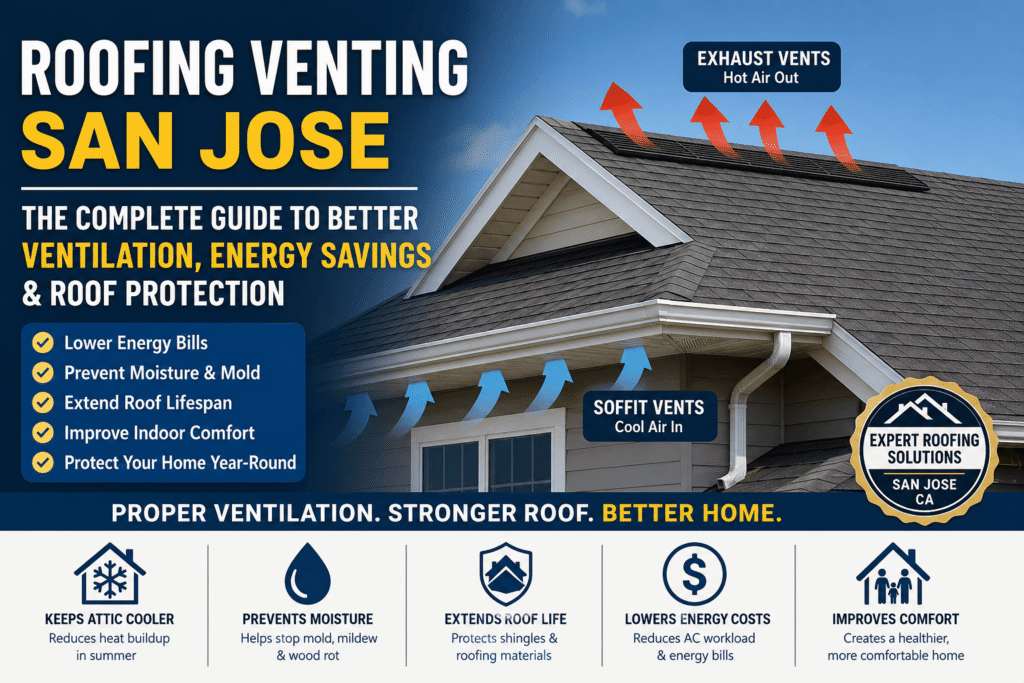
Roof ventilation is a system designed to allow continuous airflow through the attic. Fresh air enters through intake vents and exits through exhaust vents, creating natural circulation that removes excess heat and moisture.
A properly designed ventilation system helps maintain a balanced attic temperature throughout the year.
The main objectives include:
- Reducing excessive attic heat
- Preventing moisture buildup
- Protecting insulation
- Extending roof lifespan
- Improving indoor comfort
- Lowering energy consumption
For homes in San Jose, where temperatures can become quite warm during summer, proper roof ventilation is especially valuable.
Why Roofing Venting San Jose Is Important
Many homeowners underestimate the impact of attic ventilation until expensive roofing problems begin to appear.
Controls Excess Heat
Without proper airflow, attic temperatures may become significantly hotter than outdoor temperatures during summer.
Excessive heat can:
- Damage roof decking
- Age shingles prematurely
- Increase indoor temperatures
- Force air conditioners to work harder
Proper ventilation allows hot air to escape before it causes damage.
Prevents Moisture Damage
Everyday household activities produce moisture.
Examples include:
- Cooking
- Showering
- Laundry
- Indoor plants
Warm moist air naturally rises into the attic.
Without ventilation, condensation forms on wooden structures, leading to:
- Mold
- Mildew
- Wood rot
- Structural deterioration
How Roofing Venting San Jose Works
A balanced ventilation system includes two important components.
Intake Vents
These vents allow cool outside air to enter the attic.
Common intake vents include:
- Soffit vents
- Fascia vents
- Drip-edge vents
Exhaust Vents
These vents release warm air from the attic.
Popular exhaust options include:
- Ridge vents
- Roof louvers
- Box vents
- Turbine vents
- Power attic fans
Fresh air enters from the bottom while warm air exits through the top, creating continuous natural airflow.
Types of Roofing Venting San Jose Systems
Different homes require different ventilation systems depending on roof design, attic size, and climate.
Ridge Vents
Ridge vents run along the roof’s highest point.
Advantages include:
- Nearly invisible appearance
- Even airflow
- Low maintenance
- Excellent energy efficiency
They are among the most popular options for modern homes.
Soffit Vents
Installed beneath roof overhangs, soffit vents provide continuous intake airflow.
Benefits include:
- Balanced ventilation
- Improved attic circulation
- Long service life
- Affordable installation
Box Vents
Box vents are static vents installed near the roof peak.
Advantages include:
- Simple installation
- Cost-effective
- No moving parts
- Reliable operation
Turbine Vents
Wind-powered turbine vents rotate when wind passes through them.
Benefits include:
- No electricity required
- Good airflow
- Durable construction
Performance depends on wind availability.
Powered Attic Fans
Electric or solar-powered fans actively remove hot attic air.
Advantages:
- High airflow
- Rapid cooling
- Suitable for large attics
They require proper installation to prevent pressure imbalance.
Signs Your Home Needs Better Roofing Venting San Jose
Several warning signs may indicate ventilation problems.
High Energy Bills
If cooling costs continue increasing during summer, poor attic ventilation may be contributing to excessive indoor heat.
Hot Upstairs Rooms
Rooms located directly beneath the roof often become uncomfortable when attic heat cannot escape.
Mold Growth
Dark spots, mildew odors, or visible mold inside the attic suggest trapped moisture.
Damaged Shingles
Excessive attic temperatures may cause shingles to:
- Curl
- Crack
- Warp
- Age prematurely
Rusted Metal Components
Condensation inside the attic can corrode nails, flashing, and metal connectors.
Benefits of Proper Roofing Venting San Jose
A quality ventilation system provides long-term advantages.
Longer Roof Lifespan
Balanced airflow protects roofing materials from excessive heat and moisture damage.
Lower Cooling Costs
A cooler attic means the air conditioning system operates more efficiently.
Better Indoor Comfort
Proper ventilation helps maintain more consistent indoor temperatures.
Healthier Indoor Air
Moisture control reduces the likelihood of mold and mildew, improving overall air quality.
Protects Structural Components
Roof decking, rafters, insulation, and framing remain dry and structurally sound.
Common Roofing Venting San Jose Mistakes
Even newer homes can have ventilation issues.
Common mistakes include:
Too Few Intake Vents
Without enough fresh air entering the attic, exhaust vents cannot function effectively.
Mixing Different Exhaust Systems
Combining ridge vents with powered fans may reduce ventilation efficiency if not professionally designed.
Blocked Soffit Vents
Insulation sometimes covers soffit vents, restricting airflow.
Incorrect Vent Placement
Poor positioning creates uneven airflow and leaves hot spots inside the attic.
Roofing Venting San Jose Installation Process
Professional installation generally follows these steps:
- Roof inspection
- Attic airflow evaluation
- Ventilation calculations
- Selection of appropriate vent types
- Installation of intake vents
- Installation of exhaust vents
- Final airflow testing
Each home requires a customized ventilation design based on roof size and attic configuration.
Maintaining Roofing Venting San Jose Systems
Routine maintenance keeps ventilation operating efficiently.
Recommended maintenance tasks include:
- Inspect vents annually
- Remove leaves and debris
- Clean bird nests
- Check for insect activity
- Examine flashing around vents
- Replace damaged vent covers
- Ensure soffit vents remain unobstructed
Preventive maintenance reduces the risk of costly roof repairs.
Choosing the Right Roofing Contractor
Hiring an experienced roofing professional is essential for achieving balanced ventilation.
Look for contractors who:
- Have experience with residential roofing
- Understand local building requirements
- Perform attic airflow calculations
- Offer written estimates
- Use quality ventilation products
- Provide workmanship warranties
- Have positive customer reviews
Professional assessment helps determine the most suitable ventilation system for your home.
Frequently Asked Questions About Roofing Venting San Jose
How often should roof vents be inspected?
A professional inspection is recommended at least once each year and after severe storms.
Can roof ventilation reduce electricity bills?
Yes. Proper attic ventilation lowers attic temperatures, reducing the workload on air conditioning systems.
What is the best roof vent type?
There is no universal answer. Ridge vents combined with soffit vents are commonly considered one of the most effective balanced systems for many residential homes.
Do all homes need attic ventilation?
Yes. Nearly every home benefits from balanced attic ventilation to control heat and moisture.
Can poor ventilation shorten roof life?
Absolutely. Excessive heat and trapped moisture can significantly reduce the lifespan of roofing materials and structural components.
Conclusion
A properly designed roofing venting San Jose system is a smart investment that protects your home from heat, moisture, and long-term structural damage. Effective attic ventilation not only improves indoor comfort but also extends the lifespan of roofing materials, supports better energy efficiency, and helps prevent costly repairs caused by mold, condensation, and excessive attic temperatures.
Whether you are building a new home, replacing an aging roof, or upgrading your attic ventilation, choosing the right combination of intake and exhaust vents is essential. Regular inspections and maintenance ensure the system continues to perform efficiently for years to come. By understanding the importance of roof ventilation and addressing issues early, homeowners can enjoy a safer, healthier, and more comfortable living environment while protecting one of their home’s most valuable assets.