
Artificial intelligence has changed the way people create, edit, and share visual content. What once required professional photography skills, graphic design software, or hours of manual editing can now be completed in minutes with the right artificial intelligence tools. One of the most exciting developments in this area is the AI Image Generator, a technology that can turn simple written descriptions into detailed and visually appealing images.
From bloggers and marketers to designers, students, social media creators, and online businesses, people are using AI-powered image tools for a wide range of creative tasks. These platforms can produce illustrations, product images, realistic photographs, digital artwork, logos, backgrounds, concept designs, and much more.
What Is an AI Image Generator?
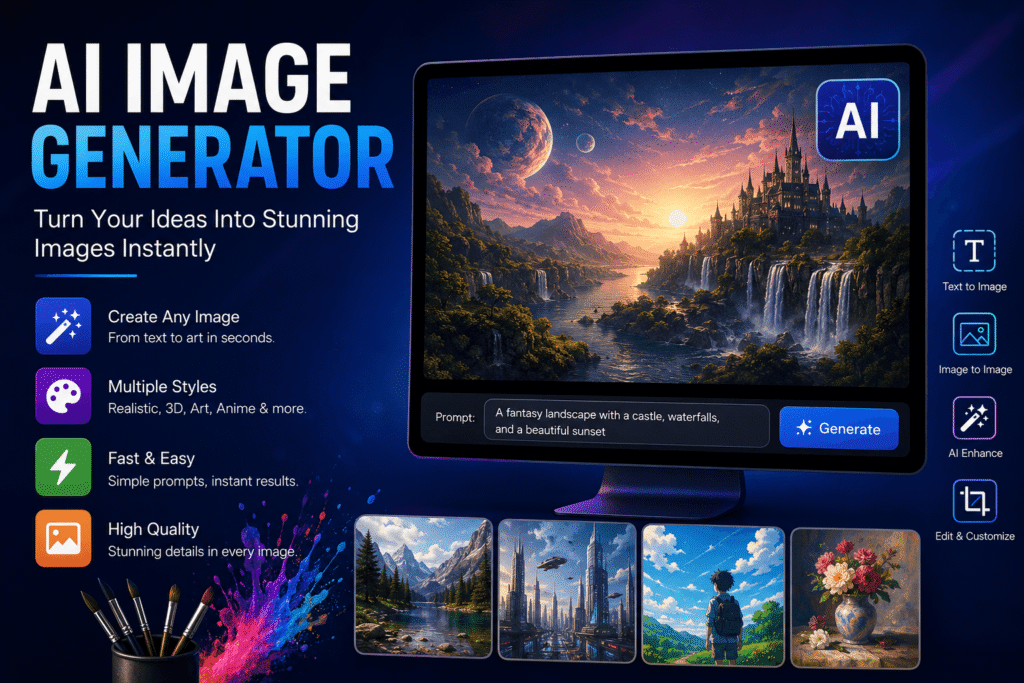
An AI Image Generator is a software tool that uses artificial intelligence and machine learning models to create images based on user instructions. Instead of drawing an image manually, users describe what they want in a text prompt, and the system generates a visual interpretation of that description.
For example, a user could enter a prompt such as “a futuristic city at sunset with flying cars and glass skyscrapers.” The system analyzes the words, understands the requested elements, and produces an image matching the description.
Modern generators can also modify existing images. Users may be able to remove objects, change backgrounds, add details, improve image quality, or transform an image into a different artistic style.
How Does an AI Image Generator Work?
The technology behind these tools is complex, but the basic process is relatively simple from a user’s perspective.
Understanding the Text Prompt
The process usually begins with a written prompt. The artificial intelligence model analyzes words, descriptions, objects, colors, styles, environments, and relationships between different elements.
The quality of the prompt can significantly affect the final result. A detailed description usually gives the model more information to work with.
Creating the Image
After understanding the prompt, the model generates an image using patterns learned from large amounts of training data. Depending on the platform, the process may involve sophisticated diffusion or other generative techniques.
The result is not simply a copied photograph. The system generates new visual content according to the instructions and capabilities of the model.
Refining the Result
Many modern platforms allow users to make additional changes. A user can generate multiple versions, adjust the prompt, change the style, modify specific areas, or request a completely different composition.
This makes the technology useful not only for creating images from scratch but also for creative experimentation.
Why AI Image Generators Are Becoming So Popular
The growing popularity of AI-powered visual tools comes from their combination of speed, accessibility, and creative flexibility.
Traditional image production can require cameras, lighting equipment, editing software, design knowledge, and considerable time. AI reduces many of these barriers.
Faster Content Creation
A professional-looking visual can often be produced within minutes. This is particularly useful for businesses and creators who need fresh content regularly.
Affordable Visual Production
Hiring photographers, illustrators, or professional designers for every project can become expensive. AI tools can provide an affordable alternative for many basic creative tasks.
Accessible to Beginners
Users do not necessarily need advanced design skills. Someone with no experience in Photoshop or other professional software can describe an idea and experiment with different results.
Endless Creative Possibilities
A single concept can be transformed into numerous styles, compositions, environments, and visual themes. This makes AI especially useful during brainstorming and concept development.
Best Uses for an AI Image Generator
The technology has applications across many industries and professions.
AI Image Generator for Marketing
Marketing teams can create social media graphics, campaign concepts, advertisements, banners, promotional visuals, and presentation artwork.
Instead of waiting for a complete photoshoot, marketers can quickly explore different visual ideas before deciding on a final campaign direction.
AI Image Generator for Bloggers
Bloggers need attractive featured images and supporting graphics to make their articles more engaging. AI can help create custom visuals that match an article’s subject.
For example, a technology blog could generate futuristic computer illustrations, while a travel website could create destination-inspired artwork.
AI Image Generator for YouTube
YouTube creators can use generated visuals for thumbnails, backgrounds, video concepts, and promotional material. A strong visual can help a video stand out among competing content.
However, creators should always review generated images carefully, especially when using recognizable people, brands, or copyrighted material.
AI Image Generator for E-Commerce
Online stores can use AI-generated visuals for product concepts, lifestyle scenes, promotional backgrounds, and advertising campaigns.
Businesses can experiment with different environments without organizing a separate photoshoot for every variation.
AI Image Generator for Designers
Professional designers can use these tools for inspiration, mood boards, concept development, rough compositions, and creative exploration.
Rather than replacing every design task, AI can become another tool within a designer’s workflow.
What Makes a Good AI Image Generator?
Not every platform produces the same results. Several factors should be considered before choosing a tool.
Image Quality
High-quality generators can produce detailed textures, realistic lighting, convincing environments, and sophisticated compositions.
For professional projects, image resolution and consistency are particularly important.
Prompt Understanding
A good system should accurately interpret detailed instructions. It should understand relationships between objects rather than simply generating unrelated elements.
Editing Features
Generation is only one part of modern image creation. Useful editing functions can include background replacement, object removal, image expansion, inpainting, and style transformation.
Text Rendering
Generating readable text inside images has historically been difficult for many models. Modern systems have improved considerably, but users should still check signs, posters, product labels, and other text-heavy designs for errors.
Commercial Usage
Businesses should carefully review the licensing and usage terms of their chosen platform. Rules can differ depending on the service, subscription plan, generated content, and intended use.
How to Write Better Prompts
The quality of an AI-generated image often depends on how clearly the user communicates the idea.
Describe the Main Subject
Start by explaining exactly what should appear in the image.
For example, instead of writing “a car,” specify “a modern electric sports car parked beside a futuristic glass building.”
Add Style and Environment
Include information about the visual style, location, lighting, colors, atmosphere, and composition.
Words such as cinematic, realistic, minimalist, editorial, dramatic lighting, soft natural light, or watercolor can help communicate a creative direction.
Specify Composition
If the image is intended for a particular platform, describe the desired composition. You might request a close-up portrait, wide landscape, centered product shot, or vertical social media composition.
Experiment With Prompts
Prompt writing is often an iterative process. If the first result is not suitable, adjust the description instead of starting from scratch.
Small changes can produce significantly different results.
Advantages and Limitations of AI Image Generation
Like any technology, these tools have both strengths and weaknesses.
Major Advantages
The biggest advantages include speed, accessibility, creative flexibility, lower production costs, and the ability to quickly test multiple concepts.
They are particularly valuable when users need visual ideas but do not have access to professional photography or illustration resources.
Important Limitations
Generated images are not always perfect. Problems can occur with hands, faces, anatomy, reflections, object relationships, and small details.
Another challenge is consistency. Maintaining the same character, product, or visual identity across many images can require specialized tools and careful prompting.
Users should also consider copyright, privacy, trademark, licensing, and ethical issues when creating and publishing AI-generated content.
AI Image Generator vs Traditional Design
AI generation does not necessarily mean traditional design is becoming obsolete. Instead, the two approaches can complement each other.
A designer can use AI to create an initial concept and then refine the result manually. This combination can save time while maintaining professional control over typography, branding, layout, and final editing.
For businesses, this hybrid approach can provide both creative speed and human quality control.
How to Choose the Right Tool
Choosing the right platform depends on the user’s goals.
A beginner may prioritize ease of use and affordability. A professional designer may care more about advanced editing, resolution, consistency, and workflow integration.
Businesses should additionally examine commercial licensing, privacy policies, team features, and content controls.
Before committing to a paid subscription, users should test the platform with several realistic prompts and determine whether the results meet their requirements.
The Future of AI Image Generation
The technology is developing rapidly. Future systems are expected to become better at understanding complex instructions, producing consistent characters and products, editing images naturally, and generating accurate text.
We are also likely to see deeper integration with video creation, design applications, advertising platforms, e-commerce systems, and content management workflows.
As the technology improves, the most valuable skill may not simply be knowing how to generate an image. Understanding visual communication, branding, composition, storytelling, and responsible AI use will remain important.
Final Thoughts
An AI Image Generator has transformed visual content creation by making sophisticated image generation available to a much wider audience. Whether someone needs a blog illustration, marketing concept, product scene, social media graphic, creative artwork, or design inspiration, AI can significantly reduce the time between an idea and a finished visual.
However, the best results come from treating AI as a creative assistant rather than an automatic replacement for human judgment. Clear prompts, careful editing, quality control, and an understanding of licensing can make a major difference.
As these tools continue to improve throughout 2026 and beyond, AI-powered image creation is likely to become an increasingly normal part of digital marketing, design, entertainment, education, and online business. For anyone working with visual content, learning how to use this technology effectively can provide a valuable creative advantage.
Frequently Asked Questions
What is an AI Image Generator?
It is an artificial intelligence-powered tool that creates or modifies images based on written instructions, reference images, or other inputs.
Can AI generate realistic photographs?
Yes. Modern systems can create highly realistic people, products, environments, and scenes, although users should carefully inspect the final image for visual errors.
Are AI-generated images free to use?
Usage rights vary between platforms and subscription plans. Users should always review the specific terms of the service before using generated content commercially.
Can AI create images from text?
Yes. Text-to-image generation is one of the most common functions. Users describe a scene or concept, and the system creates a visual based on that description.
Will AI replace graphic designers?
AI is more likely to change design workflows than completely replace designers. Human creativity, strategy, branding, communication, and professional judgment remain essential for many projects.