
Introduction
Roofing venting San Jose is one of the most important yet often overlooked aspects of a healthy roofing system. While homeowners usually focus on shingles, gutters, or roof repairs, proper ventilation plays an equally critical role in protecting the entire structure. A well-ventilated roof helps regulate attic temperatures, prevents moisture buildup, extends the lifespan of roofing materials, and improves indoor comfort throughout the year.
San Jose experiences warm summers and mild winters, making attic ventilation essential for maintaining energy efficiency. Without adequate airflow, excessive heat can become trapped inside the attic, causing higher cooling costs and unnecessary strain on roofing materials. During cooler months, poor ventilation may also allow moisture to accumulate, creating conditions that encourage mold growth and wood deterioration.
This guide explains everything homeowners need to know about roof ventilation, including how it works, why it matters, available vent types, warning signs of poor airflow, installation methods, maintenance practices, and tips for choosing the right ventilation system for your home.
What Is Roofing Venting San Jose?
Roofing venting San Jose refers to the design and installation of ventilation systems that allow fresh air to enter and warm, humid air to exit an attic space. These systems create continuous airflow that keeps attic temperatures balanced while reducing moisture accumulation.
A complete ventilation system usually consists of two essential components:
- Intake vents
- Exhaust vents
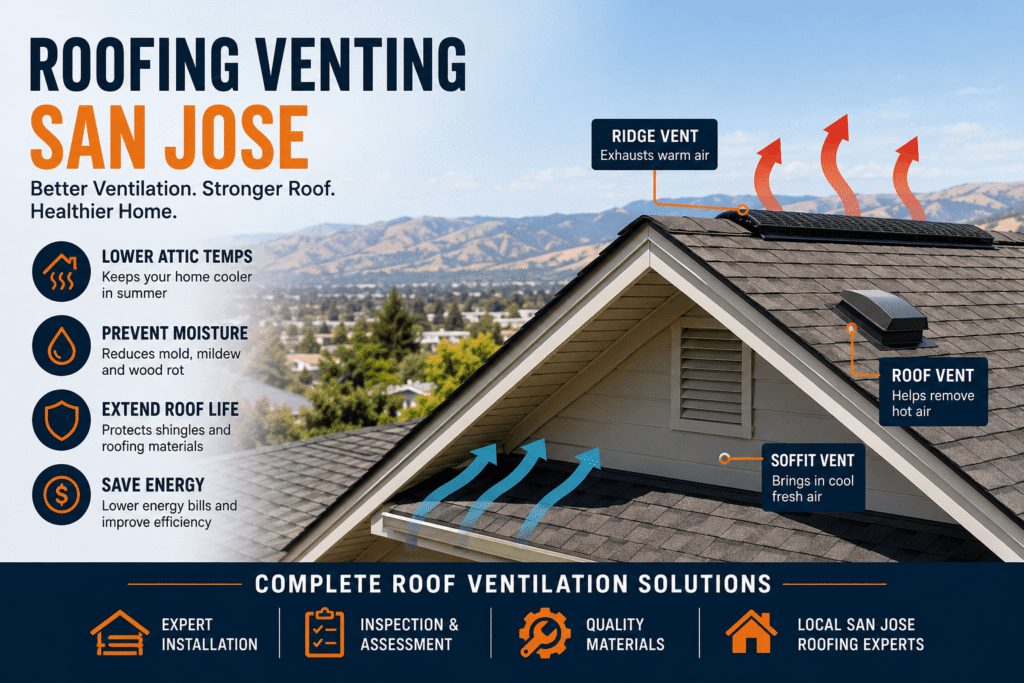
Fresh air enters through intake vents located near the roof’s lower edge and exits through exhaust vents installed near the roof peak. This continuous air circulation keeps the attic dry and comfortable year-round.
Why Roofing Venting San Jose Is Important
Proper roof ventilation provides numerous benefits that go beyond simple temperature control.
Improves Energy Efficiency
During hot California summers, attic temperatures can exceed 150°F without proper ventilation. Excess heat transfers into living spaces, forcing air conditioning systems to work harder.
Effective ventilation reduces attic temperatures, helping homeowners lower electricity consumption and improve indoor comfort.
Extends Roof Lifespan
Extreme heat accelerates the aging process of roofing materials. Shingles may crack, curl, or lose protective granules much sooner than expected.
Proper airflow protects roofing materials from excessive thermal stress, allowing them to last closer to their intended lifespan.
Prevents Moisture Damage
Everyday household activities generate moisture that rises into the attic.
Without ventilation, trapped humidity can cause:
- Mold growth
- Mildew
- Rotting wood
- Damaged insulation
- Rusted metal fasteners
Balanced airflow removes excess moisture before damage occurs.
Enhances Indoor Comfort
A properly ventilated attic creates a more consistent indoor temperature throughout the home, reducing hot spots during summer afternoons.
How Roofing Venting San Jose Works
A balanced ventilation system follows a simple airflow principle.
Intake Ventilation
Cool outside air enters through vents located beneath the roof overhang, commonly known as soffit vents.
These vents continuously draw fresh air into the attic.
Exhaust Ventilation
Warm air naturally rises toward the highest point of the roof.
Exhaust vents allow this heated air to escape, preventing excessive heat buildup.
Together, intake and exhaust ventilation create natural circulation without requiring mechanical assistance.
Types of Roofing Venting San Jose Systems
Different homes require different ventilation solutions depending on roof design, attic size, and climate.
Ridge Vents
Ridge vents are installed along the roof’s highest point.
Advantages include:
- Continuous airflow
- Nearly invisible appearance
- Even ventilation across the roof
- Low maintenance
Many roofing professionals consider ridge vents the most efficient passive ventilation option.
Soffit Vents
Soffit vents are positioned beneath roof overhangs.
Benefits include:
- Continuous fresh air intake
- Improved attic circulation
- Reduced moisture accumulation
- Excellent compatibility with ridge vents
Together, soffit and ridge vents create balanced airflow.
Box Vents
Box vents are individual openings installed near the roof ridge.
They provide passive ventilation for homes where ridge vents may not be practical.
Gable Vents
These vents are installed on the exterior walls of attic gables.
They work best on homes with suitable roof designs and can supplement other ventilation systems.
Turbine Vents
Wind-powered turbine vents rotate when exposed to airflow.
Their spinning action helps pull warm air out of the attic without using electricity.
Powered Roof Vents
Electric or solar-powered fans actively remove hot attic air.
These systems may be useful for:
- Large attics
- Homes with limited natural airflow
- Extremely hot environments
However, they should always be professionally sized to avoid creating negative air pressure.
Signs Your Home Needs Better Roofing Venting San Jose
Many homeowners overlook ventilation problems until significant damage develops.
Common warning signs include:
High Cooling Bills
Unexpected increases in electricity costs often indicate excessive attic heat.
Extremely Hot Attic
If entering the attic feels like stepping into an oven, ventilation may be inadequate.
Mold Growth
Dark stains on wood surfaces or insulation may indicate excessive moisture.
Peeling Interior Paint
Humidity trapped inside walls can eventually affect interior finishes.
Roof Shingle Damage
Premature curling, cracking, or blistering shingles may result from excessive attic temperatures.
Condensation
Water droplets on rafters or roof decking often signal poor ventilation.
Choosing the Right Roofing Venting San Jose System
Every home has unique ventilation requirements.
Professionals evaluate several factors before recommending a system.
Roof Design
Roof slope affects airflow patterns and determines which vent types perform best.
Attic Size
Larger attics generally require greater ventilation capacity.
Existing Ventilation
Current intake and exhaust systems should be evaluated before adding new vents.
Local Climate
San Jose’s warm climate makes heat reduction a major priority while still maintaining adequate moisture control.
Roofing Venting San Jose Installation Process
Professional installation ensures proper airflow and long-term performance.
Step 1: Roof Inspection
The contractor examines:
- Roof condition
- Existing vents
- Attic insulation
- Moisture levels
- Airflow balance
Step 2: Ventilation Planning
Based on the inspection, the contractor determines:
- Number of vents
- Vent placement
- Intake-to-exhaust ratio
- Airflow requirements
Step 3: Installation
Openings are carefully cut into the roof where needed.
Vents are secured using roofing materials designed to prevent leaks.
Step 4: Final Inspection
The completed system is tested to verify balanced airflow throughout the attic.
Common Roofing Venting San Jose Mistakes
Several installation errors reduce ventilation efficiency.
Too Few Intake Vents
Without sufficient intake airflow, exhaust vents cannot function properly.
Blocking Soffit Vents
Insulation sometimes covers soffit openings, preventing fresh air from entering.
Proper attic baffles keep airflow unobstructed.
Mixing Incompatible Vent Types
Combining certain exhaust vent styles can disrupt airflow and reduce overall performance.
Incorrect Vent Placement
Poor positioning limits natural airflow and creates uneven attic temperatures.
Roof Ventilation Maintenance Tips
Even well-designed systems require occasional maintenance.
Inspect Annually
Check vents for damage after storms or high winds.
Remove Debris
Leaves, nests, and dirt can restrict airflow.
Check for Moisture
Inspect the attic regularly for condensation or mold.
Monitor Insulation
Ensure insulation does not block soffit vents.
Replace Damaged Components
Broken vents should be repaired promptly to maintain proper airflow.
Benefits of Professional Roofing Venting San Jose Services
Experienced roofing professionals understand ventilation science and local building practices.
Professional installation offers:
- Accurate airflow calculations
- Proper vent placement
- Leak-resistant installation
- Code-compliant workmanship
- Long-term roof protection
A professionally installed ventilation system provides better performance than guesswork or improper DIY installation.
How Roofing Venting Supports Sustainable Living
Modern homeowners increasingly value energy-efficient improvements.
Proper roof ventilation contributes by:
- Reducing energy consumption
- Lowering cooling demand
- Extending roofing material lifespan
- Minimizing repair costs
- Supporting healthier indoor air quality
These long-term benefits make roof ventilation one of the smartest investments for residential properties.
Frequently Asked Questions About Roofing Venting San Jose
How long does roof ventilation last?
Quality roof vents can last 20 years or longer when properly installed and maintained.
Does every house need roof ventilation?
Yes. Nearly every home benefits from balanced attic ventilation to regulate temperature and moisture.
Can poor ventilation damage shingles?
Yes. Excessive attic heat accelerates shingle deterioration, shortening the roof’s service life.
Is ridge ventilation better than box vents?
Ridge vents generally provide more consistent airflow across the entire roof when paired with adequate soffit ventilation.
How often should roof vents be inspected?
Most roofing experts recommend an inspection at least once a year and after severe weather events.
Conclusion
A properly designed roofing venting San Jose system is essential for protecting your home, reducing energy costs, and maximizing the lifespan of your roof. By maintaining balanced airflow between intake and exhaust vents, homeowners can prevent excessive attic heat, reduce moisture-related damage, and improve indoor comfort throughout every season.
Whether you are building a new home, replacing an aging roof, or upgrading attic ventilation, investing in a professionally planned ventilation system delivers lasting value. Regular inspections, routine maintenance, and selecting the right combination of vents will help ensure your roofing system performs efficiently for many years. With the right approach, proper roof ventilation becomes more than just a building feature—it becomes a long-term investment in the safety, efficiency, and durability of your entire home.