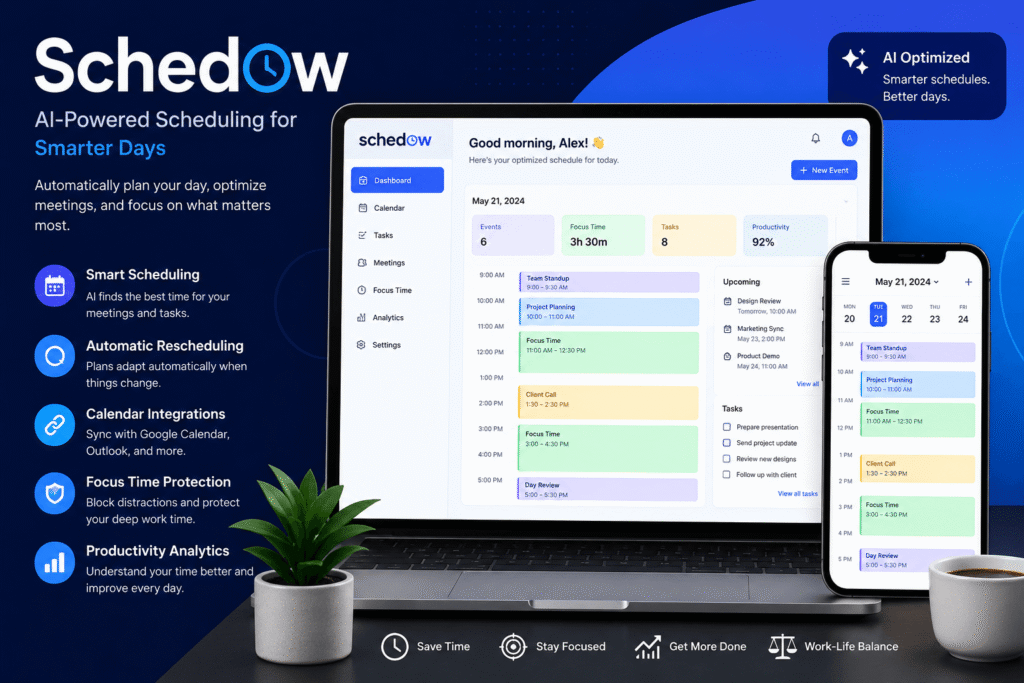

In today’s fast-moving digital world, managing time effectively has become one of the biggest challenges for individuals and businesses alike. With meetings, deadlines, appointments, and personal commitments competing for attention, smart scheduling tools are becoming more important than ever. One name that has started gaining attention is schedow.
Although schedow is still an emerging term, it is increasingly associated with AI-powered scheduling technology designed to simplify calendar management, improve productivity, and reduce the stress of planning daily activities. Whether you are a freelancer, business owner, student, or corporate professional, understanding how schedow works can help you organize your time more efficiently.
This guide explores everything you need to know about schedow, including its features, benefits, practical applications, advantages, limitations, and future potential.
What Is Schedow?
Schedow is commonly recognized as an AI-based scheduling and productivity solution that helps users organize tasks, meetings, appointments, and daily routines intelligently. Instead of manually planning every activity, the platform uses automation and artificial intelligence to recommend the most efficient schedule.
The primary objective of schedow is simple: save time while maximizing productivity.
Unlike traditional calendar applications that simply display events, schedow focuses on optimizing how time is used. It analyzes priorities, available hours, deadlines, and meeting requirements before creating an efficient daily plan.
This intelligent approach makes scheduling less stressful and far more accurate.
Why Schedow Is Becoming Popular
Modern workplaces rely heavily on digital collaboration. Employees often juggle multiple meetings, remote work, project deadlines, and personal commitments simultaneously.
Schedow addresses these challenges by reducing manual scheduling work.
Some reasons behind its growing popularity include:
- AI-powered automation
- Smart calendar management
- Improved work-life balance
- Better productivity
- Reduced scheduling conflicts
- Easier meeting coordination
- Time optimization
- Flexible planning
People appreciate tools that eliminate repetitive administrative tasks, allowing them to focus on meaningful work.
Key Features of Schedow
Intelligent Calendar Management
One of the strongest features is automatic calendar organization.
Instead of filling your calendar manually, the system identifies available time slots and places meetings or tasks where they fit best.
This minimizes overlaps and scheduling errors.
AI-Based Scheduling Suggestions
Artificial intelligence analyzes your workload before suggesting the best possible schedule.
The system may recommend:
- Earlier meetings
- Focus work sessions
- Break periods
- Priority task placement
- Flexible appointment times
These suggestions help improve efficiency without requiring constant user input.
Automatic Meeting Coordination
Coordinating meetings between multiple people often takes considerable effort.
Schedow simplifies this by checking everyone’s availability and recommending suitable meeting times.
This feature is especially useful for remote teams working across different time zones.
Task Prioritization
Not every task deserves equal attention.
Schedow helps users identify high-priority activities based on deadlines, importance, and workload.
As priorities change, schedules can be adjusted automatically.
Time Blocking
Time blocking is a popular productivity method where similar tasks are grouped together.
Schedow supports this strategy by reserving dedicated periods for:
- Deep work
- Emails
- Meetings
- Creative projects
- Personal activities
This approach reduces distractions and improves concentration.
Benefits of Using Schedow
The advantages extend beyond simple scheduling.
Better Productivity
When daily planning becomes automatic, users spend less time organizing and more time completing valuable work.
This leads to higher productivity levels.
Reduced Stress
Missed appointments and overlapping meetings often create unnecessary stress.
Schedow minimizes these issues through intelligent planning.
Users can feel more confident that important commitments won’t be forgotten.
Improved Time Management
Understanding how time is spent allows users to make better decisions.
With optimized scheduling, even busy professionals can create balanced daily routines.
Enhanced Team Collaboration
Organizations benefit from smoother meeting coordination.
Instead of exchanging multiple emails about availability, scheduling becomes much faster.
This improves communication across departments.
Greater Flexibility
Unexpected changes happen regularly.
If a meeting is canceled or postponed, schedow can reorganize the remaining schedule automatically.
This flexibility helps maintain productivity throughout the day.
Who Can Use Schedow?
One of the biggest strengths of schedow is its versatility.
It serves many different types of users.
Business Professionals
Executives can organize meetings, presentations, travel schedules, and project deadlines more effectively.
Remote Teams
Distributed teams often struggle with time zone differences.
AI scheduling makes collaboration easier by identifying suitable meeting windows.
Students
Students can balance classes, assignments, study sessions, and extracurricular activities with greater efficiency.
Freelancers
Independent professionals frequently manage multiple clients.
Schedow helps organize appointments while preventing scheduling conflicts.
Small Business Owners
Entrepreneurs often handle several responsibilities simultaneously.
Automated scheduling reduces administrative workload and saves valuable time.
How Schedow Improves Daily Workflow
Daily productivity depends on more than simply filling a calendar.
Schedow focuses on creating a balanced workflow.
For example, instead of scheduling demanding tasks back-to-back, the system may recommend short recovery breaks between intensive work sessions.
Likewise, it can reserve uninterrupted focus periods before placing meetings later in the day.
This thoughtful organization supports sustained productivity without causing burnout.
Schedow vs Traditional Calendar Apps
Many people wonder how schedow differs from ordinary calendar software.
| Feature | Traditional Calendar | Schedow |
|---|---|---|
| Manual Scheduling | Yes | Mostly Automated |
| AI Assistance | Limited | Advanced |
| Smart Recommendations | No | Yes |
| Automatic Rescheduling | Limited | Yes |
| Task Prioritization | Basic | Intelligent |
| Productivity Optimization | Minimal | High |
| Conflict Detection | Basic | Advanced |
While traditional calendars mainly record events, schedow actively improves how time is managed.
Potential Limitations of Schedow
Like any digital solution, schedow has certain limitations.
Learning Curve
New users may require time to understand all available features.
However, most platforms become easier after regular use.
Dependence on Accurate Data
AI recommendations are only as reliable as the information provided.
Incorrect deadlines or missing appointments can reduce scheduling accuracy.
Internet Connectivity
Cloud-based scheduling platforms generally require stable internet access for synchronization across devices.
Best Practices for Using Schedow
To get the most value, users should follow several practical strategies.
Keep Your Calendar Updated
Always enter important appointments and deadlines promptly.
Accurate information produces better scheduling recommendations.
Set Clear Priorities
Identify urgent tasks before allowing the system to organize your schedule.
Priority-based planning improves overall productivity.
Review Your Schedule Daily
Even automated schedules benefit from regular review.
Small adjustments can improve efficiency when unexpected events occur.
Allow Buffer Time
Avoid filling every minute of the day.
Leaving small gaps between appointments reduces stress and accommodates unexpected delays.
The Future of Schedow
Artificial intelligence continues transforming workplace productivity.
Future versions of schedow may include even more advanced capabilities, such as:
- Predictive scheduling
- Voice-controlled planning
- Deeper collaboration tools
- Advanced productivity analytics
- Personalized work habit recommendations
- Enhanced automation across multiple devices
- Smarter project management integration
As AI technology evolves, scheduling systems will likely become increasingly personalized, helping users achieve better efficiency with minimal manual effort.
Frequently Asked Questions About Schedow
Is schedow a traditional calendar?
No. It is generally described as an AI-powered scheduling solution that goes beyond basic calendar management by automating planning and optimizing productivity.
Who should use schedow?
Professionals, students, freelancers, entrepreneurs, managers, and remote teams can all benefit from intelligent scheduling features.
Does schedow save time?
Yes. Automation reduces manual scheduling tasks, allowing users to focus on more important responsibilities.
Can schedow improve productivity?
Yes. By organizing priorities, reducing conflicts, and optimizing daily routines, it helps users work more efficiently.
Is AI important in modern scheduling?
Artificial intelligence is becoming increasingly valuable because it can analyze workloads, recommend better schedules, and adapt to changing priorities automatically.
Final Thoughts on Schedow
As digital work environments become more complex, intelligent scheduling solutions are no longer a luxury—they are quickly becoming an essential productivity tool. Schedow represents this new generation of AI-powered planning by helping users organize calendars, prioritize tasks, coordinate meetings, and make better use of every working hour.
Whether you manage a growing business, study full-time, work remotely, or handle multiple client projects, adopting smarter scheduling practices can significantly improve your daily workflow. While the technology is still evolving, its focus on automation, flexibility, and productivity makes schedow a promising solution for modern time management.
By understanding its features, benefits, and best practices, users can make informed decisions about integrating AI-assisted scheduling into their personal and professional lives. As artificial intelligence continues to advance, schedow is well-positioned to play an increasingly important role in helping people work smarter, stay organized, and achieve better results with less effort.